- May 18, 2026
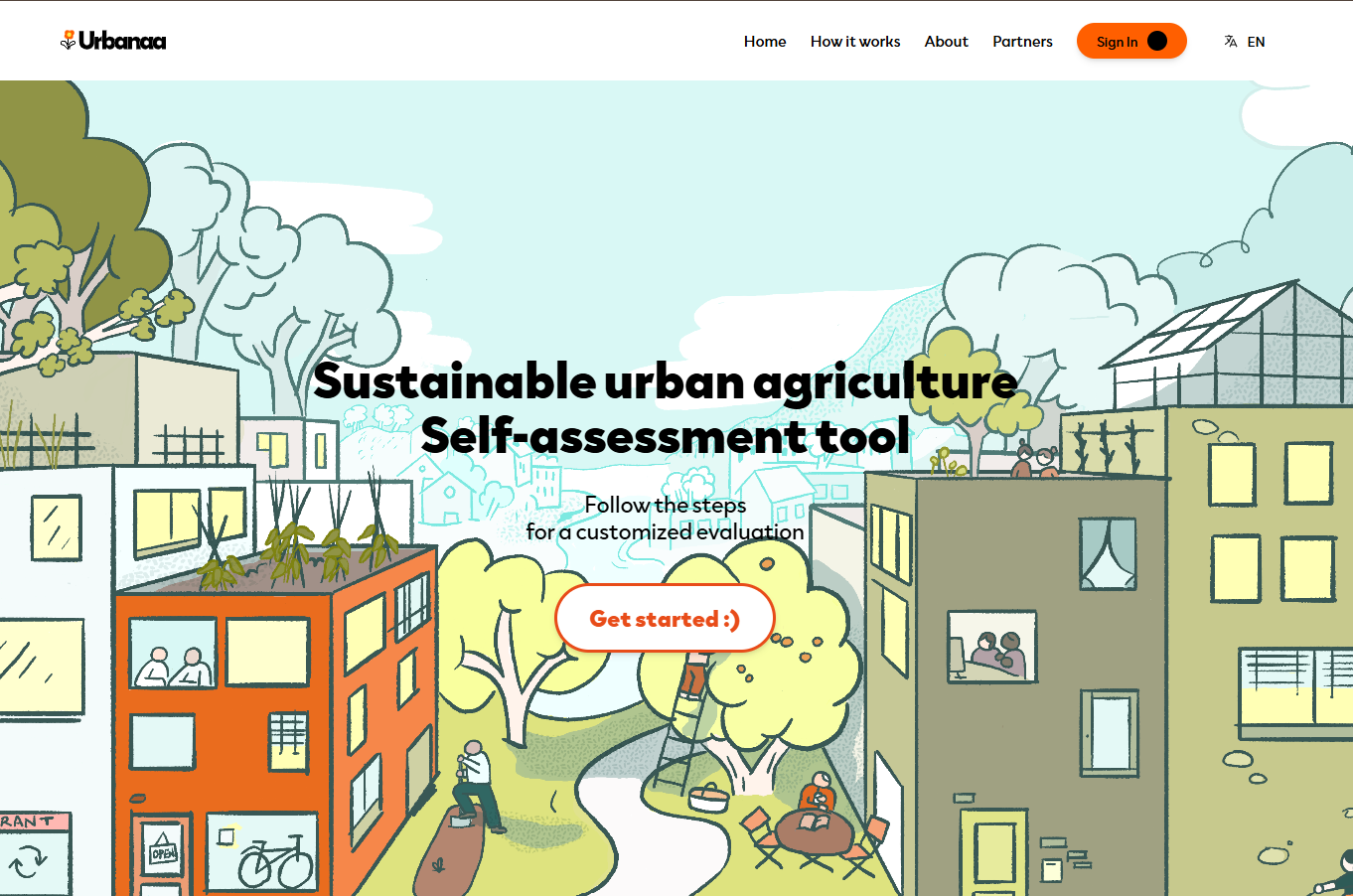
With the rapid growth of urban agriculture across French cities and globally, a major challenge remains: how can we assess the sustainability of diverse projects with varying objectives and in diverse contexts? To address this challenge, a research team from AgroParisTech, led by Agnès Lelièvre, an associate professor at AgroParisTech, has developed URBANAA, a groundbreaking online platform designed to enable urban agriculture stakeholders to self-assess, manage, and improve the sustainability of their projects.
A methodological gap finally filled
Despite the growing number of urban farms and local initiatives, to date no tool for their sustainability assessment has been available.
Existing frameworks, often designed for rural agriculture or developed for specific needs, fail to account for the diversity of urban contexts or to incorporate all the dimensions unique to these projects.
URBANAA provides a concrete solution to this gap by offering:
- Access to a database of criteria and indicators specifically tailored to urban agriculture, covering a wide range of dimensions (environmental, social, economic, etc.)
- A scientifically validated methodological framework, derived from research and co-developed with stakeholders
- High flexibility of use, allowing adaptation to the diversity of projects
A flexible and practical tool for decision-makers and field workers
URBANAA has been designed as an intuitive and customizable platform, aimed at three main categories of users:
- Urban farm sponsors: these are organizations that support these projects by providing funding, land, or technical resources. They may include state and local governments, local authorities, landowners, or other entities involved in project development
- Project leaders: urban farmers, coordinators, or managers, they are responsible for the implementation and operational management of urban farms
- Urban agriculture experts: they support sponsors or project leaders by providing technical assistance, advice, or expertise in the project evaluation process.
Specifically, the platform allows users to:
- Access a comprehensive database of several hundred indicators drawn from scientific literature and feedback
- Build a fully customized evaluation grid tailored to the project’s specific characteristics (location, objectives, business model, etc.)
- Enter and self-assess data for one or more projects
- Compare projects and track a project’s progress over time
- View results in various formats, facilitating decision-making, communication, or strategic management
A tool to support the development of urban agriculture
Urban agriculture is experiencing growing development, driven by a diverse range of stakeholders and projects with varied characteristics. In this context, the issue of sustainability assessment is a key challenge for better understanding, analyzing, and managing these initiatives.
By offering a framework specifically designed for urban agriculture, URBANAA enables its users to :
- Structure the project assessment process, using appropriate criteria and indicators
- Account for the diversity of implementation contexts (location, functions, project models)
- Support the collective or individual identification of the project’s expected functions and the means to assess them
By facilitating access to a tailored self-assessment approach, the tool aims to support stakeholders in their analytical practices and to bolster assessment processes within the sector.
A project born out of research and rooted in local communities
URBANAA was developed as part of Paola Clerino’s doctoral thesis, funded by the AgroParisTech Urban Agriculture Chair, a partnership-based endowed chair under the auspices of the AgroParisTech Foundation. Its development continued with support from European research projects, notably FoodCityBoost, which aims to support the development of sustainable urban food systems.
Designed using a participatory approach, the tool was developed with and for its future users, incorporating their needs from the earliest stages of design.
Currently in the testing phase with an initial group of stakeholders, URBANAA is undergoing continuous improvements prior to a wider roll out.
A phased rollout in 2026
Following a phase of real-world testing, the platform will be rolled out gradually throughout 2026, accompanied by the development of dedicated training modules and outreach initiatives at the national and international levels. The goal is to encourage rapid adoption of the tool by industry stakeholders and to support its ramp-up.
Would you like to discover URBANAA?
