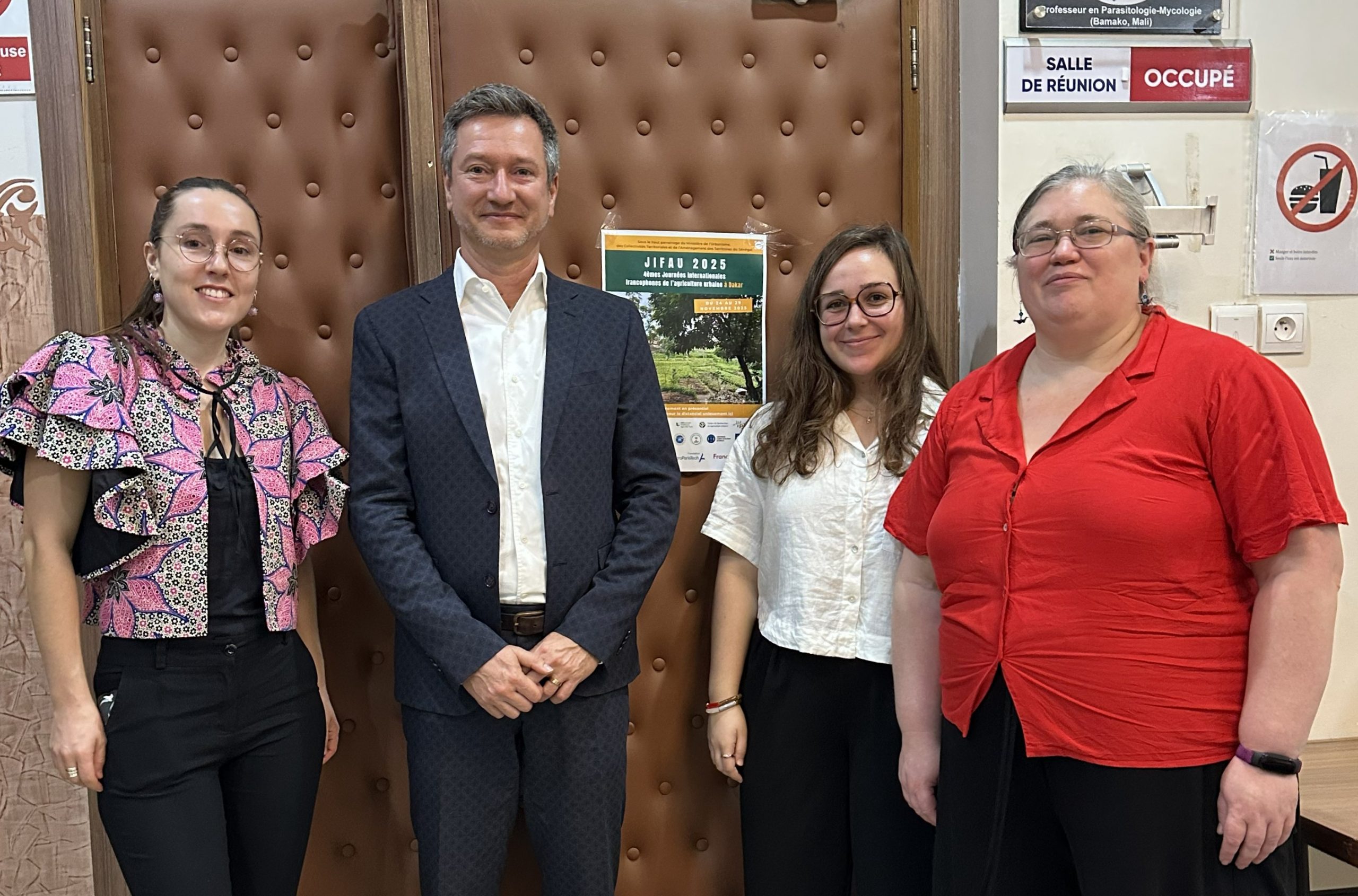
By Maylis Leblanc (CRAU), edited by Dimitra Fourkalidou (RFF)
Between 24 November 2025 and 28 November 2025, the 4th Journées Internationales Francophones de l’Agriculture Urbaine (JIFAU) gathered researchers, practitioners, policymakers, and institutions in Dakar, Senegal. An initiative organized by Centre de Recherches en Agriculture Urbaine of the University of Liege (CRAU), AgroParisTech, the Chaire Agricultures Urbaines, and Cheikh Anta Diop University (UCAD), which followed earlier renditions in Montréal, Bordeaux, and Gembloux, this year marked a return to a continent where urban agriculture is ancestral, dynamic, and strategically vital.
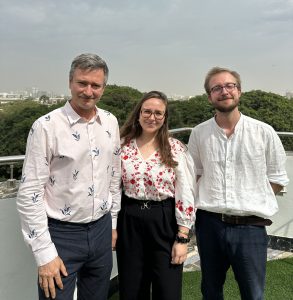
The program foregrounded land access, resource management, biodiversity, environmental resilience, social and socioeconomic roles, and food systems, explicitly centering voices from French-speaking countries in the Global South and Madagascar.
JIFAU, more than a conference, functions as a collaborative platform: workshops, roundtables, and field visits created room to compare realities across North and South while strengthening cooperation. An environment that encouraged dialogue, joint learning, and constructive exchange across all sessions.
FOODCITYBOOST in the spotlight
FOODCITYBOOST’s representative, Maylis Leblanc, from CRAU, presented results from our Catalog of Innovative Urban Agriculture Systems, arguing that innovation is a lever for integrated resource management in cities. FOODCITYBOOST’s analysis of initiatives identified five complementary forms of innovation: agronomic, economic, environmental, social, and territorial, each reshaping how urban resources are mobilized and governed.
Here are three representative examples highlighted in the catalog:
- ○ Rotterzwam (Rotterdam) turns urban biowaste into a growing medium, showcasing circularity that cuts virgin inputs and city outflows.
- ○ Metabolic Greenhouse (Amsterdam) treats the greenhouse as an integrated metabolic system, closing loops for water, energy, and nutrients.
- ○ Stadtacker (Stuttgart) advances collective water stewardship, agroecological practices, plus rainwater harvesting in a participatory garden.
Together, these examples showcase how circular, technical, and collective approaches underpin more efficient, sustainable, and resilient urban systems.
From the consortium, Agnes Fargue-Lelievre (AgroParisTech) and Charlotte Liborio-Cornet (ASTREDHOR) also joined; Charlotte shared the work on biodiversity (covered in their recent publication), reinforcing the link between ecological quality and long-term performance of urban agriculture sites.
Learning in the field
The Dakar program moved beyond meeting rooms into city and peri-urban spaces.
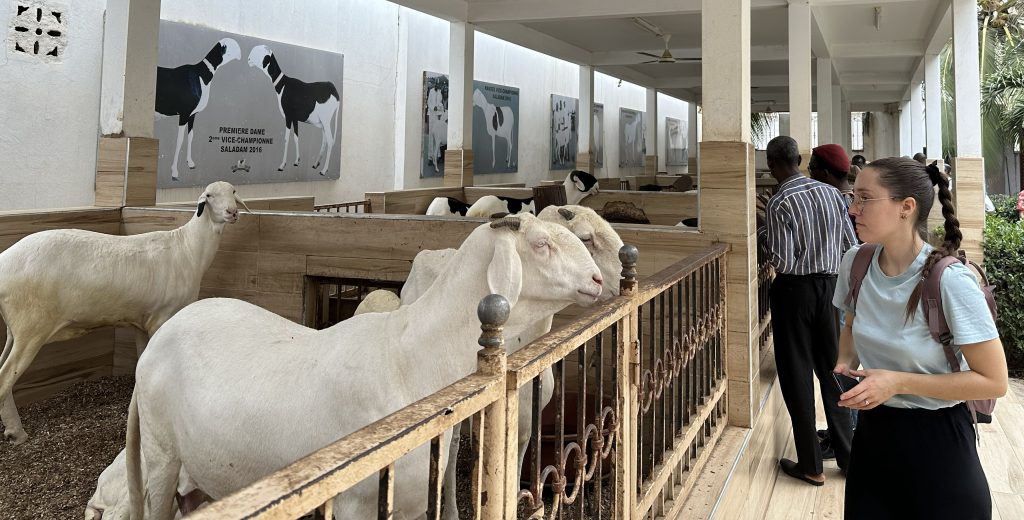
Field visits included:
- ○ Sheepfold in Mbao (Ladoum breed)
- ○ Grande Niaye
- ○ Gardens of the women of Cité Jet d’Eau
- ○ Cyclococo
- ○ Lendeng
- ○ Mbeubeuss landfill
These stops grounded the week’s discussions in real production systems, community leadership, and circular practices under pressure from urbanization and climate risks. Overall, JIFAU 2025 highlighted a simple truth: urban agriculture isn’t just about yields. It’s a coordination challenge across environmental, social, economic, territorial, and technical resources. By elevating Southern experiences and linking them with European practice, the event accelerates actionable models that are policy-relevant, practitioner-ready, and locally adapted.
___________________
If you’re working on related projects or want to connect with the Catalog of Innovative Urban Agriculture Systems, reach out; we’re happy to share materials and explore collaboration.
CRAU Representative, Maylis Leblanc ()
Project Communication (reframe.food), Christopher Kennard ()
Project Coordinator, Pierre Chopin ()
:%20Urban%20agriculture,%20by%20and%20for%20the%20Francophone%20world)